Why visit Cambodia
Cambodia is one of Southeast Asia's most fascinating destinations — ancient temples, tropical islands, warm locals and outstanding value for money.
While Angkor Wat is the country's most famous attraction, Cambodia has so much more to offer. Wander the bustling streets of Phnom Penh, relax on the white-sand beaches of Koh Rong, cycle the pepper farms of Kampot, or trek to ethical elephant sanctuaries in Mondulkiri.
It's also one of the cheapest countries in Asia: backpackers travel comfortably on £25 a day, and even mid-range trips feel like luxury at twice that.
This guide covers everything you actually need: itineraries, real costs, transport that works, the best stops compared honestly, food worth seeking out, and the practical details — visa, SIM, money, safety — most blogs gloss over.
Cambodia destinations map
Tap any destination to jump to its overview. Cambodia divides loosely into Angkor & the northwest, the capital region, the south coast & islands, and the northeast highlands.
Best places to visit in Cambodia
From the temples of Angkor to the islands of Koh Rong and the riverside calm of Kampot, here are the destinations worth building a Cambodia trip around — what each is like, how long to stay and who they suit best.
Angkor · Gateway city
Siem Reap
The base for Angkor — Pub Street, night markets, Khmer cooking classes and the Phare Circus.
Temples · UNESCO
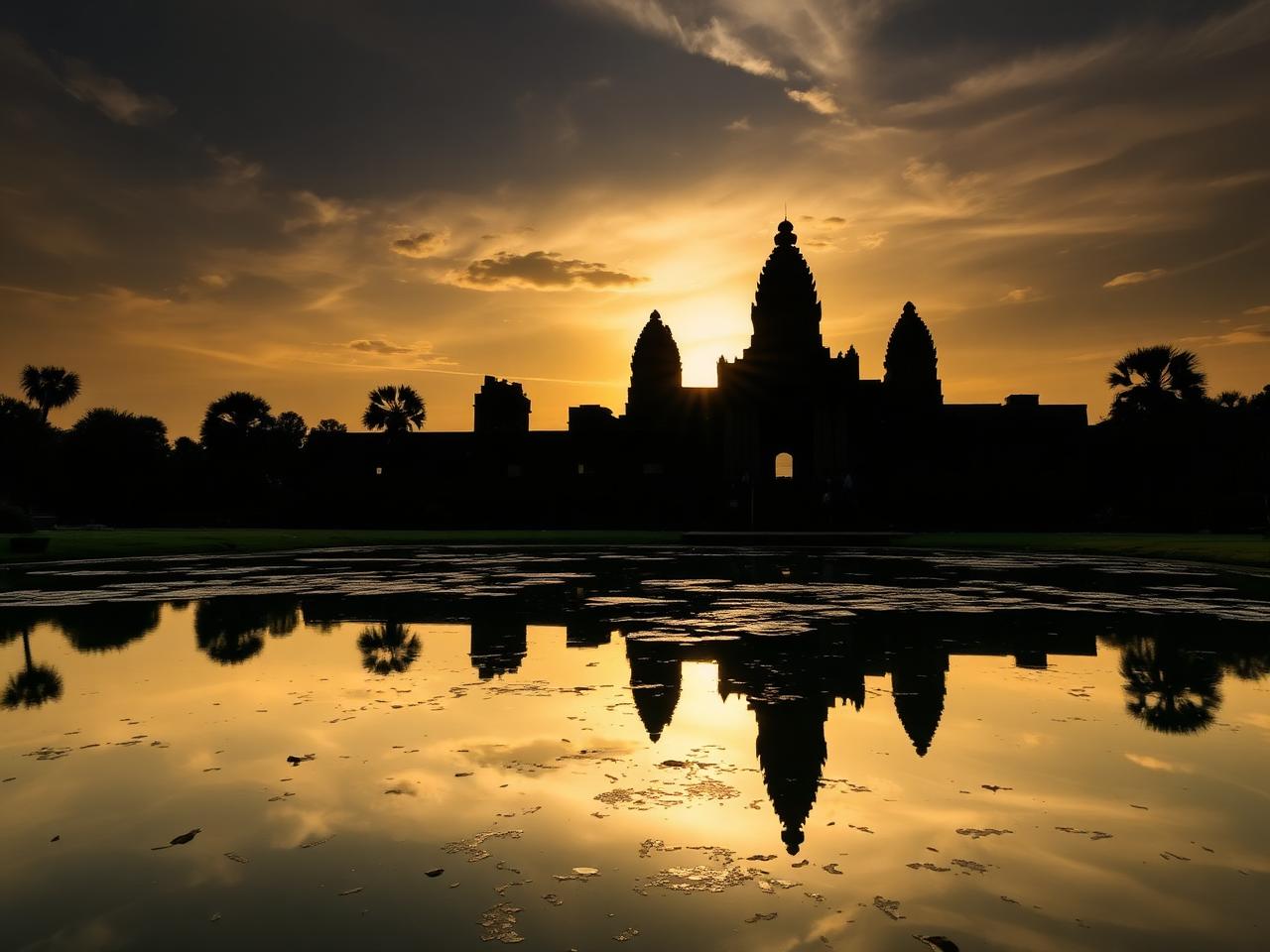
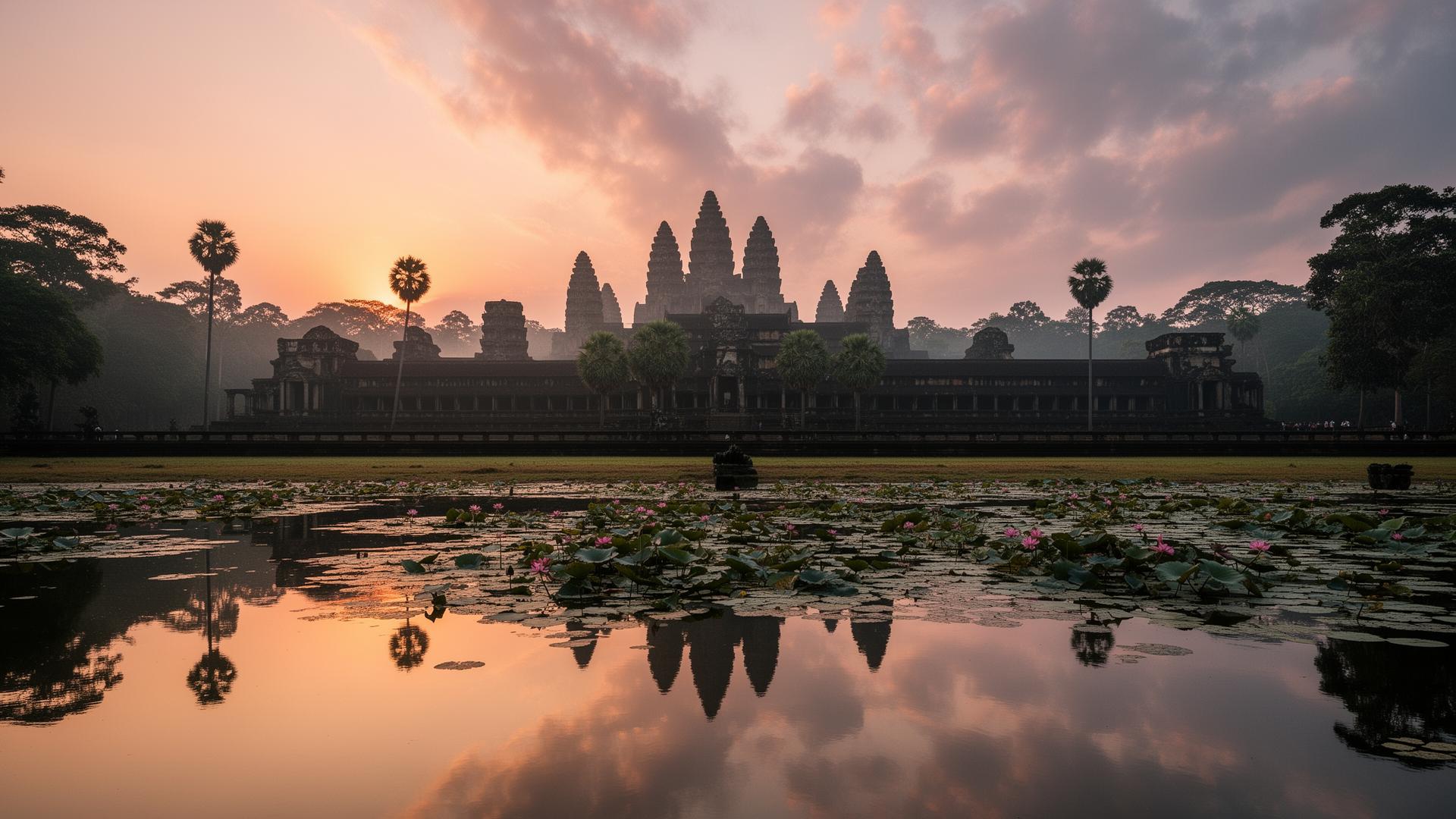
Angkor Wat
The world's largest religious monument and the iconic sunrise of any Cambodia trip.
Temples · Ancient capital
Angkor Thom
Walled royal city with the famous stone-faced Bayon temple at its centre.
Temples · Jungle
Ta Prohm
The 'Tomb Raider' temple — sandstone ruins wrapped in giant strangler-fig roots.
Temples · Carvings
Banteay Srei
The 'Citadel of Women' — pink sandstone with the finest detailed carvings in Angkor.
Capital · History
Phnom Penh
Royal Palace, Khmer Rouge memorials and a riverside that comes alive at sunset.
Island · Beach
Koh Rong
White-sand beaches, bioluminescent plankton and Cambodia's most lively island scene.
Island · Quiet
Koh Rong Sanloem
Slower, quieter sister island — Saracen Bay, hammocks and yoga retreats.
South · Riverside
Kampot
Mellow riverside town famous for pepper farms, sunset cruises and colonial cafés.
South · Seafood
Kep
Sleepy coastal village known for fresh crab, a small national park and quiet beaches.
Northwest · Culture
Battambang
Khmer art scene, bamboo train, Phare Ponleu Selpak and rural countryside rides.
Northeast · Wildlife
Kratie
Sleepy Mekong town and the easiest place in Asia to see endangered Irrawaddy dolphins.
Highlands · Elephants
Mondulkiri
Rolling hills, waterfalls and ethical elephant sanctuaries — Cambodia at its calmest.
Highlands · Off-beat
Ratanakiri
Jungle treks, indigenous villages and the crater-lake swim at Yeak Laom.
Lake · Floating villages
Tonlé Sap
Southeast Asia's largest lake — stilted villages, fish farms and birdlife.
Island · Hidden
Koh Ta Kiev
Eco-rustic island off Sihanoukville — beach huts, candle-lit dinners, no WiFi.
Things to see and do in Cambodia
From Angkor's sunrise to Phnom Penh's history, the islands of Koh Rong and the highlands of Mondulkiri — these are the experiences worth building each leg of your Cambodia trip around.
Temples
Visit Angkor Wat
- Sunrise at Angkor Wat
- Bayon temple faces
- Ta Prohm jungle ruins
- Angkor Thom royal city
- Banteay Srei carvings
- Preah Khan and Neak Pean
- Multi-day temple pass
- Sunset at Pre Rup
Gateway
Explore Siem Reap
- Pub Street nightlife
- Night markets
- Riverside cafés
- Khmer cooking class
- Phare Cambodian Circus
- Apsara dance show
- Floating villages day trip
- Spa treatments
Capital
Discover Phnom Penh
- Royal Palace & Silver Pagoda
- Tuol Sleng Genocide Museum
- Choeung Ek Killing Fields
- National Museum
- Central Market (Psar Thmey)
- Riverside sunset walk
- Rooftop bars in BKK1
Islands
Relax in Koh Rong
- Sok San & Long Set beaches
- Bioluminescent night swim
- Snorkelling boat trips
- Beach bar nights
- Lighthouse jungle walk
- Quiet Saracen Bay (Sanloem)
South coast
Explore Kampot & Kep
- Kampot pepper farm tour
- Sunset river cruise
- Bokor National Park
- Kep crab market
- Kep National Park hike
- Countryside cycling
Highlands
Off-beat Cambodia
- Mondulkiri elephant sanctuary
- Ratanakiri Yeak Laom Lake
- Cardamom Mountains trek
- Kratie Irrawaddy dolphins
- Battambang bamboo train
- Preah Vihear cliff temple
Best Cambodia itineraries
How long do you need? Cambodia rewards both short visits (a week covers Angkor and Phnom Penh) and slow trips. Here are five route lengths that consistently work.
Cambodia in a Week
Siem Reap & Angkor → Phnom Penh — the essential first-timer route.
Best for: Short trips & add-ons
Temples & Beaches
Siem Reap → Phnom Penh → Koh Rong or Sanloem.
Best for: First-time visitors
Classic Cambodia
Siem Reap, Battambang, Phnom Penh, Kampot, Kep and Koh Rong.
Best for: Most travellers
Cambodia In-Depth
Add Kratie's dolphins, Mondulkiri elephants and a second island.
Best for: Backpackers & slow trips
Cambodia & Vietnam
Combine Siem Reap and Phnom Penh with a Mekong crossing into Vietnam.
Best for: Two-country trips
Best time to visit Cambodia
Cambodia has two main seasons: a dry season (November–April) and a wet season (May–October). November–February is the sweet spot — cool, dry and perfect for Angkor. March and April are very hot.
Angkor & Siem Reap ⭐
November–February — cool mornings and dry, clear sunrises.
Phnom Penh ⭐
November–February — comfortable for sightseeing and city walks.
Koh Rong & Sanloem ⭐
December–April — flat seas and clear water.
Kampot & Kep
November–March for sunset cruises and pepper-farm tours.
Avoid
April for extreme heat; September for the wettest weeks.
Overall best months
December, January and February.
Cambodia budget guide
Cambodia is one of Asia's best-value destinations. Here's what each tier actually looks like day-to-day, with realistic daily, weekly and 2-week estimates.
Backpacker
£20 – £35 / day
£140 – £245 / week · £280 – £490 / 2 weeks
- Accommodation: Hostels & guesthouses · £4–10
- Food: Local Khmer meals · £1–3
- Transport: Buses, shared tuk-tuks
- Activities: Multi-day Angkor pass, free markets
Mid-Range
£45 – £80 / day
£315 – £560 / week · £630 – £1,120 / 2 weeks
- Accommodation: Boutique hotels · £30–70
- Food: Mix of Khmer & Western cafés
- Transport: Private tuk-tuks, sleeper buses
- Activities: Guided temple tours, cooking classes
Luxury
£120 – £300+ / day
£840 – £2,100 / week · £1,680 – £4,200 / 2 weeks
- Accommodation: 5★ resorts & boutique villas · £150–500
- Food: Fine dining & riverside restaurants
- Transport: Private cars and drivers
- Activities: Private guides, helicopter rides, spa
Sample mid-range day in Siem Reap
Breakfast £3 · private tuk-tuk for the temples £15 · Angkor day pass £29 · cocktail on Pub Street £4 · Khmer dinner £8 · boutique room £35 = £94
Money-saving tips for Cambodia
Cambodia is already excellent value, but these are the small habits that quietly cut a 2-week trip cost by 20–30% without sacrificing the experience.
Cambodia transport guide
Cambodia is overland country. Buses link every major destination cheaply, tuk-tuks handle the cities and temples, and ferries hop you out to the islands.
Backbone of Cambodia travel — Phnom Penh ↔ Siem Reap, Kampot, Kep, Sihanoukville
£6 – £15
Overnight option between major hubs — saves a hotel night
£10 – £18
Iconic and cheap — best for cities, temples and short hops. Use Grab or PassApp to avoid haggling.
£0.50 – £5
Reliable rideshare in Phnom Penh, Siem Reap and Sihanoukville
£1 – £6
Affordable for groups and flexible itineraries
£40 – £100 / day
Speedboats from Sihanoukville to Koh Rong and Koh Rong Sanloem (45–60 min)
£10 – £20
Limited but useful — Phnom Penh ↔ Siem Reap or Sihanoukville
£40 – £90
Slow but scenic — Phnom Penh ↔ Sihanoukville on weekends only
£5 – £8
Available in Siem Reap, Kampot and the islands — experienced riders only
£4 – £8 / day
Best way to explore Angkor temples at your own pace
£1 – £3 / day
Where to stay in Cambodia
Each Cambodian city has neighbourhoods with completely different personalities. Use this as a shortlist before opening Booking.com or Agoda.
Siem Reap
Best for
Recommended areas
- City Centre
- Pub Street area
- Riverside
- Wat Bo
Phnom Penh
Best for
Recommended areas
- Riverside
- BKK1
- Daun Penh
Koh Rong
Best for
Recommended areas
- Koh Touch (lively)
- Sok San
- Long Set
Koh Rong Sanloem
Best for
Recommended areas
- Saracen Bay
- M'Pai Bay
- Lazy Beach
Kampot
Best for
Recommended areas
- Riverside
- Old Town
- Outside town (pepper-farm stays)
Kep
Best for
Recommended areas
- Crab Market area
- Hilltop boutique villas
Best food to try in Cambodia
Khmer food is fragrant, fresh and underrated — lemongrass, kaffir lime, coconut and the world's best pepper, with French-colonial touches in the cities.
Fish Amok
Cambodia's national dish — coconut and lemongrass fish curry steamed in banana leaf.
Lok Lak
Stir-fried beef with peppery lime-and-pepper dipping sauce — a Khmer classic.
Nom Banh Chok
Fresh rice noodles topped with green fish curry — Cambodia's beloved breakfast.
Khmer Red Curry
Mild, fragrant red curry with coconut milk, chicken or beef and vegetables.
Bai Sach Chrouk
Pork-and-rice breakfast — grilled marinated pork over broken rice, with pickles.
Kampot Pepper Crab
Fresh crab stir-fried with the world-famous green Kampot peppercorns.
Num Pang
Cambodian banh-mi-style baguette stuffed with pâté, pork and pickled veg.
Cha Houy Teuk
Cool jelly dessert with coconut milk and palm sugar.
Beef Lok Lak Skewers
Street-food version — marinated beef skewers grilled over charcoal.
Prahok Ktis
Pungent fermented-fish dip with pork and vegetables — adventurous but iconic.
Khmer BBQ
Tabletop grills with marinated meats and fresh herbs — popular all over Cambodia.
Tropical Fruit
Mango, dragonfruit, rambutan and durian — fresh, cheap and everywhere.
Cambodian Coffee
Strong, sweet, often iced with condensed milk.
Top experiences in Cambodia
Beyond the obvious temples, these are the experiences travellers consistently call out as Cambodia highlights.
Cambodia for different travel styles
Solo travel
Siem Reap, Phnom Penh and Koh Rong are some of the easiest places in Asia for solo travellers.
Couples
Boutique riverside hotels in Siem Reap, Saracen Bay villas, Kampot pepper farms.
Families
Siem Reap, Kampot and quieter island resorts on Koh Rong Sanloem.
Luxury
Amansara, Phum Baitang, Six Senses Krabey Island — Cambodia does luxury beautifully.
Backpackers
Cheap dorms, big hostel scenes and an easy overland route between the main stops.
History lovers
Angkor, Phnom Penh's memorials, Battambang and the cliff temple of Preah Vihear.
Adventure
Jungle treks in Mondulkiri, kayaking the Mekong, Cardamoms expeditions.
Foodies
Khmer cooking classes, Kampot pepper farms, Kep crab market, Phnom Penh street food.
Wellness
Yoga retreats on Koh Rong Sanloem and spa stays in Siem Reap.
Cambodia safety guide
Cambodia is generally a welcoming and tourist-friendly destination. The main risks are tuk-tuk and currency scams, scooter accidents and — in remote rural areas — unexploded landmines. All major tourist destinations are safe.
General safety
Keep valuables secure in busy markets and on night buses. Cities are very safe by day.
Scams
Tuk-tuk overcharging, currency confusion and inflated tour prices — use Grab/PassApp and agree fares up front.
Scooter safety
Wear a helmet, ride only with a valid licence and proper insurance.
Landmines
Never leave marked paths in remote rural areas. All popular sites are completely safe.
Beach & sea safety
Strong currents on the islands — observe local advice and avoid swimming after dark.
Food & water
Drink bottled or filtered water. Busy local restaurants are usually the safest food.
Health
Mosquito-borne illness is present — use repellent, especially at dusk.
Solo travel
Cambodia is popular with solo backpackers — the main tourist route is easy and social.
Emergency numbers
Police: 117 · Ambulance: 119 · Fire: 118 · Tourist Police: 097 778 0002
Practical information
Money & ATMs
Cash is king. ATMs dispense USD or KHR — fees usually $4–5 per withdrawal.
Cards
Visa & Mastercard accepted in hotels and bigger restaurants. Cash needed daily.
US Dollars
Widely accepted everywhere. Bring crisp, unmarked notes — torn ones are often refused.
SIM cards & eSIMs
Smart and Cellcard offer the best tourist SIMs. Airalo eSIMs work in 60 seconds.
Internet & WiFi
Surprisingly good in cities and tourist hubs. Patchier on Koh Rong.
Plugs & power
Type A, C and G sockets · 230V / 50Hz. Universal adapter recommended.
Tipping
Not required but appreciated. $1–2 for tuk-tuk drivers and guides; 10% in nicer restaurants.
Dress code
Casual; modest at temples — shoulders and knees covered for Angkor.
Useful Khmer
Sua s'dei (hello), Or-kun (thanks), Thlay ponman? (how much?), Chnganh (delicious).
Healthcare
Good private hospitals in Phnom Penh and Siem Reap. Travel insurance essential.
Vaccinations
None required. Hep A, Typhoid, Tetanus commonly recommended.
Visa
30-day e-Visa or Visa on Arrival for most nationalities — apply online before flying.
Essential apps for Cambodia
These are the apps actually worth downloading before you fly.
Grab
Rideshare and tuk-tuks in Phnom Penh and Siem Reap
PassApp
Cambodian rideshare — often cheaper than Grab for tuk-tuks
12Go
Buses, sleeper buses and ferries in one search
BookMeBus
Cambodia's biggest bus booking platform
Google Maps
Reliable in all major cities and tourist areas
Google Translate
Camera mode reads Khmer menus instantly
Airalo
eSIMs in 60 seconds — Smart and Cellcard coverage
Wise
Cheap currency transfers to USD or KHR
Booking.com
Free cancellation — best for flexible trips
Agoda
Often the best rates in Cambodia
Klook
Tours, day trips and Angkor passes
XE Currency
Quick GBP / USD / KHR conversions
Cambodia FAQs
The most common questions about travelling in Cambodia, answered honestly.
Is Cambodia cheap to travel?
Yes — Cambodia is one of the cheapest countries in Southeast Asia. Backpackers comfortably spend £20–35 a day, mid-range travellers £45–80, and luxury travellers £120+. Local meals cost £1–3 and beers are around £1.
How many days do you need in Cambodia?
7 days covers Siem Reap and Phnom Penh. 10–14 days is the sweet spot for adding the islands and Kampot. 3 weeks lets you slow down and add Mondulkiri or Battambang.
Is Cambodia safe for solo travellers?
Yes — Cambodia is welcoming and easy to navigate on the main tourist route. Standard awareness applies, especially in Phnom Penh at night. Solo backpackers are very common.
What's the best month to visit Cambodia?
November to February is the dry season and ideal — comfortable temperatures, low humidity and perfect Angkor weather. December and January are peak.
How many days should I spend at Angkor Wat?
Most travellers buy a 3-day pass and use 2 full days exploring — one for the main temples (Angkor Wat, Bayon, Ta Prohm) and one for the outer circuit (Banteay Srei, Preah Khan, Neak Pean).
Can you use US Dollars in Cambodia?
Yes — USD is widely accepted everywhere. Prices are often quoted in dollars and you'll usually receive change in a mix of dollars and Cambodian Riel. Bring crisp, unmarked notes.
Is Cambodia good for backpackers?
One of the best in Southeast Asia. Cheap dorms, cheap food, easy buses between cities and a big hostel scene in Siem Reap, Phnom Penh and the islands.
Is Koh Rong worth visiting?
Yes — Koh Rong is one of Southeast Asia's best beach destinations. Choose Koh Rong for lively beaches and bioluminescent plankton, or Koh Rong Sanloem for a quieter, slower experience.
Do I need a visa for Cambodia?
Most nationalities get a 30-day Visa on Arrival or e-Visa (around $30–36). The e-Visa is the easiest option and can be applied for online before flying.
Can I drink tap water in Cambodia?
No — drink bottled or filtered water. Most accommodations provide refill stations.
What's the best Cambodia itinerary?
For 2 weeks: Siem Reap (4) → Battambang (1) → Phnom Penh (2) → Kampot/Kep (3) → Koh Rong or Sanloem (3–4).
Is it safe to ride a scooter in Cambodia?
Only if you're experienced and properly insured. Phnom Penh traffic is chaotic, but Kampot and the islands are much easier.
Are credit cards widely accepted?
Visa and Mastercard work in hotels and bigger restaurants in Siem Reap and Phnom Penh. Outside those cities, expect cash-only.
How is the WiFi and internet?
Surprisingly good — fast WiFi in cafés and most hotels in Siem Reap, Phnom Penh and Kampot. Patchier on Koh Rong. Airalo eSIMs are the easiest mobile data.
What are the best beaches in Cambodia?
Sok San Beach and Long Set on Koh Rong, Saracen Bay and Lazy Beach on Koh Rong Sanloem, and the quiet coves of Koh Ta Kiev.
Is Siem Reap or Phnom Penh better?
Different — Siem Reap is the gateway to Angkor and has the best food and nightlife scene. Phnom Penh is grittier and richer in modern history. Most travellers visit both.
Do I need travel insurance for Cambodia?
Yes — non-negotiable. Make sure your policy covers scooter riding (often excluded) and adventure activities like trekking.
Are vaccinations required for Cambodia?
No vaccinations are required for entry. Hepatitis A, Typhoid, Tetanus and Japanese Encephalitis (for long stays) are commonly recommended. Speak to a travel clinic before flying.
Is Cambodia LGBTQ+ friendly?
Cambodia is one of the more tolerant countries in Southeast Asia. Siem Reap and Phnom Penh have visible scenes; discretion is sensible in rural areas.
What plug type does Cambodia use?
Type A, C and G sockets at 230V/50Hz. A universal adapter covers you.
Is tipping expected in Cambodia?
Not traditionally — many restaurants now add a 10% service charge. Tipping tuk-tuk drivers, guides and spa staff $1–2 is appreciated.
Can I visit Cambodia during the wet season?
Yes — rain often falls as short afternoon showers and Angkor looks spectacular wrapped in mist. Tonlé Sap is at its most dramatic. Just bring a poncho.
How early should I book accommodation in Cambodia?
Peak season (Nov–Feb, Christmas) book 2–3 months ahead, especially in Siem Reap and on Koh Rong. Off-season a few days is fine.
Are landmines still a risk in Cambodia?
Yes, in some remote rural areas. Stay on marked paths in the countryside and around the Thai/Cambodian border. All major tourist areas are completely safe.
Should I take an organised Angkor tour?
A guide for at least one day adds huge context — book a private tuk-tuk driver-guide or an English-speaking historian for the main loop, then explore on your own with a bike.