Why visit India
India is Asia's most intense and rewarding travel destination. It's a country of 28 states, more than 22 major languages and cuisines that change every 200 miles. Two weeks is the minimum for a first visit; two months is what everyone wishes they'd booked.
The classic first-timer's route is the Golden Triangle — Delhi, Agra (for the Taj) and Jaipur. From there, most people add Varanasi, Rajasthan's desert cities, the Kerala backwaters, or the beaches of Goa.
Costs are famously low — a thali is £1.50, sleeper trains run for £5–15 and a heritage haveli in Rajasthan starts around £40 a night. Luxury goes as high as you want: the Oberoi Amarvilas overlooks the Taj Mahal.
India rewards travellers who plan properly. Trains sell out weeks ahead, distances are longer than they look on the map and the seasons vary wildly by region. Get those right and you'll never see anywhere else the same way.
Best places to visit in India
From the headline cities to the spots most travellers miss, here are the destinations worth building a India trip around — what each is like, how long to stay and who they suit.
Golden Triangle · Capital
Delhi
Old Delhi's chaos, Mughal tombs, Lutyens' New Delhi and India's best street food. Love it or hate it — you can't skip it.
Golden Triangle · Icon
Agra
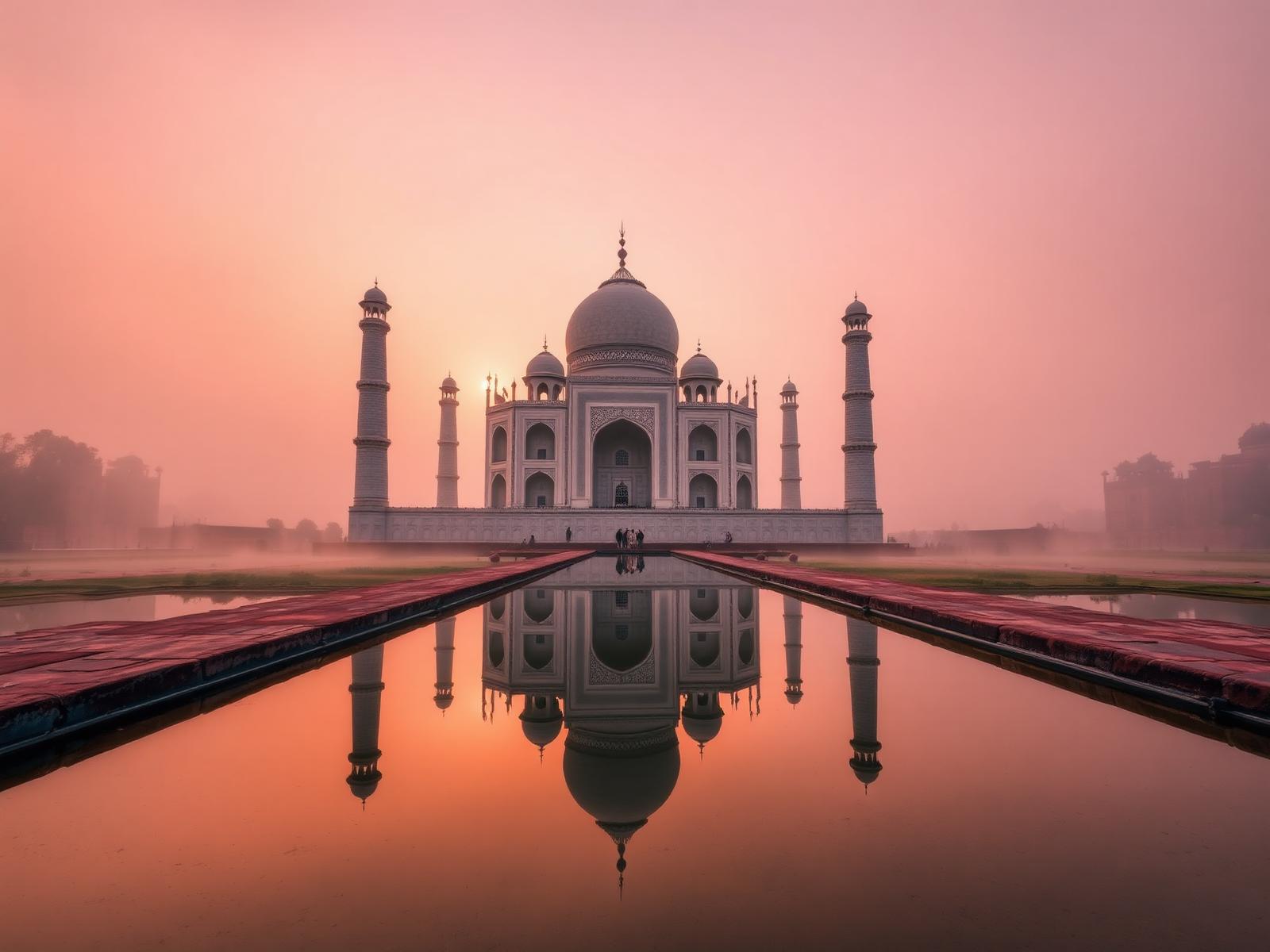
The Taj Mahal at sunrise. Agra Fort. Then move on — one full day plus a sunrise is plenty.
Rajasthan · Culture
Jaipur
The Pink City. Amber Fort, Hawa Mahal, City Palace and the best shopping in India.
Rajasthan · Romance
Udaipur
The lake palace city — Rajasthan at its most cinematic. Boat rides, rooftop restaurants and old-world charm.
Rajasthan · Fort
Jodhpur
The blue city crowned by the towering Mehrangarh Fort — arguably India's most impressive.
Rajasthan · Desert
Jaisalmer
The living golden fort on the Thar Desert edge, with overnight camel treks into the dunes.
Ganges · Spiritual
Varanasi
The oldest continuously inhabited city on earth — dawn boat trips and the Ganges aarti at Dashashwamedh Ghat.
South · Nature
Kerala Backwaters
Houseboats on the palm-fringed Alleppey and Kumarakom canals — India's slowest, greenest region.
South · Culture
Kochi (Cochin)
Spice port with Chinese fishing nets, Portuguese churches and India's best contemporary art scene.
West Coast · Beach
Goa
Palm-lined Portuguese-Indian beaches — Palolem and Agonda in the quiet south, Anjuna & Vagator in the buzzy north.
Himalayan Foothills
Rishikesh
Yoga capital of the world on the Ganges — ashrams, white-water rafting and the gateway to the mountains.
Himalayas · Adventure
Ladakh & Leh
High-altitude desert monasteries, turquoise lakes and the highest motorable passes on earth (Jun–Sep only).
Best India itineraries
How long do you really need? Here are tried-and-tested route lengths, from a quick first taste to a slow, complete loop.
Golden Triangle
Delhi → Agra → Jaipur. The essential first taste.
Best for: Short trips
Golden Triangle + Rajasthan
Delhi, Agra, Jaipur, Jodhpur, Udaipur.
Best for: First trip
North + South
Golden Triangle + Varanasi + Kerala backwaters.
Best for: Most travellers
The Grand Tour
All of the above plus Goa, Hampi or Ladakh.
Best for: Slow travel
Best time to visit India
India has three broad seasons: cool & dry (Oct–Mar) is the main tourist season, hot & dry (Apr–Jun) is punishing on the plains but great in the Himalayas, and monsoon (Jul–Sep) is wet across most of the country but ideal for Ladakh.
North India (Delhi, Rajasthan)
Cool & dry Oct–Mar. Ferociously hot Apr–Jun. Monsoon Jul–Sep.
South India (Kerala, Tamil Nadu)
Warm year-round. Monsoon Jun–Aug (SW) and Oct–Dec (NE).
Himalayas (Ladakh, Himachal, Sikkim)
Roads open Jun–Sep. Snowbound in winter — ski instead in Auli/Gulmarg.
Goa
Prime Nov–Mar. Everything closes for the June monsoon.
India budget guide
Honest, realistic budgets — what each travel style actually costs, by the day, week and 2 weeks.
Backpacker
£25 – £40 / day
£175 – £280 / week · £350 – £560 / 2 weeks
- Stay: Guesthouses & dorms · £6–15
- Food: Thalis, street food, chai
- Transport: Sleeper trains & local buses
- Activities: Free temples, walking tours
Mid-Range
£60 – £150 / day
£420 – £1,050 / week · £840 – £2,100 / 2 weeks
- Stay: Heritage hotels & havelis · £40–90
- Food: Restaurants, hotel dining
- Transport: AC trains + private driver days
- Activities: Cooking classes, guided tours
Luxury
£300 – £1,000+ / day
£2,100+ / week · £4,200+ / 2 weeks
- Stay: Oberoi, Taj Palaces, Aman · £300+
- Food: Fine dining, wine pairings
- Transport: Private car + domestic flights
- Activities: Private guides, palace tours
Sample mid-range day
Chai & paratha breakfast £1.50 · Rickshaw & metro £2 · Thali lunch £2.50 · Fort entry £4 · Cooking class £15 · Rooftop dinner £8 · Mid-range hotel £45 = £78
India transport guide
How to get around — the realistic options, what they cost and when to pick each.
Sleeper class is iconic, 2AC/3AC comfortable. Book on IRCTC 60 days ahead
£5 – £25
IndiGo, Air India, Vistara — huge network, cheap on advance booking
£30 – £120
The stress-free way through Rajasthan — car + driver £45–75/day
£45 – £75 / day
Everywhere. Insist on the meter or agree the price first
£1 – £4
Reliable in every major city — no haggling, no scams
£2 – £8
AC Volvo buses on major routes. RedBus app to book
£3 – £15
Fast, clean, air-conditioned — much easier than road traffic
£0.30 – £1
Best food to try in India
Order beyond the obvious — these are the dishes locals queue for and travellers remember years later.
Thali
The ultimate variety plate — 5–10 curries, rice, roti, dal, sweet.
Butter Chicken
Delhi's most famous export — try it at Moti Mahal, where it was invented.
Masala Dosa
Crispy fermented rice-pancake with spiced potato — South Indian breakfast champion.
Biryani
Layered basmati rice and marinated meat — Hyderabadi and Lucknowi are the classics.
Chaat
The umbrella term for spicy-sweet-sour street snacks: pani puri, dahi puri, aloo tikki.
Rogan Josh
Kashmiri lamb curry, one of the great Mughlai dishes.
Dosa & Idli
South Indian staples — fermented rice-and-lentil batter magic.
Chole Bhature
Punjabi chickpea curry with a puffed fried bread. Order in Amritsar.
Vada Pav
Mumbai's iconic potato-fritter burger — the city's favourite £0.50 snack.
Gulab Jamun & Rasmalai
The two dessert-lover essentials — order both, always.
Chai & Filter Coffee
Sweet spiced masala chai in the north; frothed South Indian filter coffee in the south.
Fish Curry (Goa & Kerala)
Coconut-milk based, tangy with kokum or tamarind — a totally different India.
Top experiences in India
The experiences travellers consistently call out as highlights.
India for different travel styles
Solo travel
Rewarding but intense — Rajasthan, Kerala and Goa are the easiest starts.
Couples
Udaipur, Kerala houseboats and heritage havelis make India ridiculously romantic.
Families
Better with kids 8+ — private driver, Kerala backwaters and Goa work well.
Luxury
Oberoi, Taj and Aman run some of the world's best hotels here.
Backpackers
£25–40/day is achievable — sleeper trains and dorms across the tourist trail.
Adventure
Ladakh motorcycle trips, Himalayan trekking and Rishikesh rafting.
India safety guide
Common-sense safety information from real travellers — what to actually watch out for.
General safety
Broadly safe, especially the tourist trail — but stay switched on in cities.
Solo female travel
Manageable with care — dress modestly, avoid night buses/trains alone, prefer Uber over street rickshaws.
Delhi Belly
The stomach bug is real — stick to hot cooked food, filtered water, no ice.
Traffic
The single biggest risk. Don't self-drive; hire a driver or use Uber.
Scams
Delhi Airport rickshaw scams and 'the hotel is closed' scam are the classics — pre-book your first night's transfer.
Air quality
Delhi Nov–Feb is heavily polluted — bring an N95 mask or plan your dates around it.
Emergency numbers
Police: 100 · Ambulance: 102 / 108 · Tourist helpline: 1363
Practical information
Visa
e-Visa required for most nationalities — apply online 4+ days ahead. 30-day, 1-year and 5-year options.
Money & ATMs
ATMs widely available in cities. Carry small notes; ₹500 is hard to break for a chai.
Cards
Visa & Mastercard accepted at hotels, malls and chain restaurants. Carry cash for street vendors.
SIM cards & eSIMs
Airtel and Jio SIMs from the airport are cheapest; Airalo eSIMs are the easiest.
Internet & WiFi
Strong WiFi at hotels and cafés; 4G/5G in cities and most popular areas.
Plugs & power
Type C, D and M sockets · 230V · a universal adapter is the easiest option.
Tipping
10% is standard in restaurants; ₹20–50 for hotel porters and drivers.
Healthcare
Private hospitals in metros are excellent value; comprehensive travel insurance is essential.
Essential apps for India
The apps actually worth downloading before you fly.
Google Maps
Reliable navigation across Asia
Google Translate
Camera mode reads local menus
Airalo
eSIMs in under a minute
Wise
Cheap currency transfers & card
Agoda
Best hotel rates across Asia
Booking.com
Free cancellation flexibility
Klook
Tours, transfers & tickets
12Go
Trains, buses & ferries across SEA
GetYourGuide
Experiences & day tours
IRCTC Rail Connect
Official Indian Railways booking
Uber / Ola
Ride-hailing in every major city
Zomato / Swiggy
Food delivery and restaurant reviews
India FAQs
The questions travellers ask most often, answered honestly.
How many days do I need in India?
Minimum two weeks for a first trip. The Golden Triangle takes 7 days; adding Rajasthan needs 14; adding Varanasi or Kerala needs 21.
Is India safe for tourists?
Broadly yes, especially the tourist trail. Solo female travellers should take extra care — pre-book transfers, avoid night buses alone and dress modestly.
Do I need a visa for India?
Yes — most nationalities need an e-Visa, applied for online 4+ days before travel. Options are 30-day, 1-year and 5-year multiple entry.
Is India expensive?
No — India is one of the cheapest countries in Asia. Backpackers can travel on £25–40/day, mid-range on £60–150. Luxury runs as high as you want.
When is the best time to visit India?
October to March is peak season nationwide. Ladakh and the high Himalayas are only accessible June–September.
Should I book Indian trains in advance?
Yes — long-distance trains sell out 30–60 days ahead. Book on IRCTC (irctc.co.in) or via 12Go. Tatkal quota releases 24 hours before departure.
What should I wear in India?
Modest, loose, light-cotton clothing. Cover shoulders and knees at temples. A scarf is useful in the north and for temple entry.
Will I get Delhi belly?
Very likely at some point — stick to freshly cooked hot food, avoid tap water and ice, and carry rehydration salts. It usually passes in 24–48 hours.
Do I need to speak Hindi?
No — English is widely spoken across the tourist trail, in hotels, and by drivers. A few Hindi words go a long way.
Is India vegetarian-friendly?
Astonishingly so — India has more vegetarian food than anywhere on earth. Say 'pure veg' and you'll find whole restaurants dedicated to it.
What plug type does India use?
Types C, D and M · 230V — bring a universal adapter.
Can I drink tap water in India?
No — bottled, filtered or boiled water only. Use a Grayl or SteriPen if you want to skip the plastic.