Why visit Laos
Laos is Southeast Asia's most relaxed and underrated destination — breathtaking mountain scenery, ancient Buddhist temples, riverside towns and some of the friendliest locals in the region.
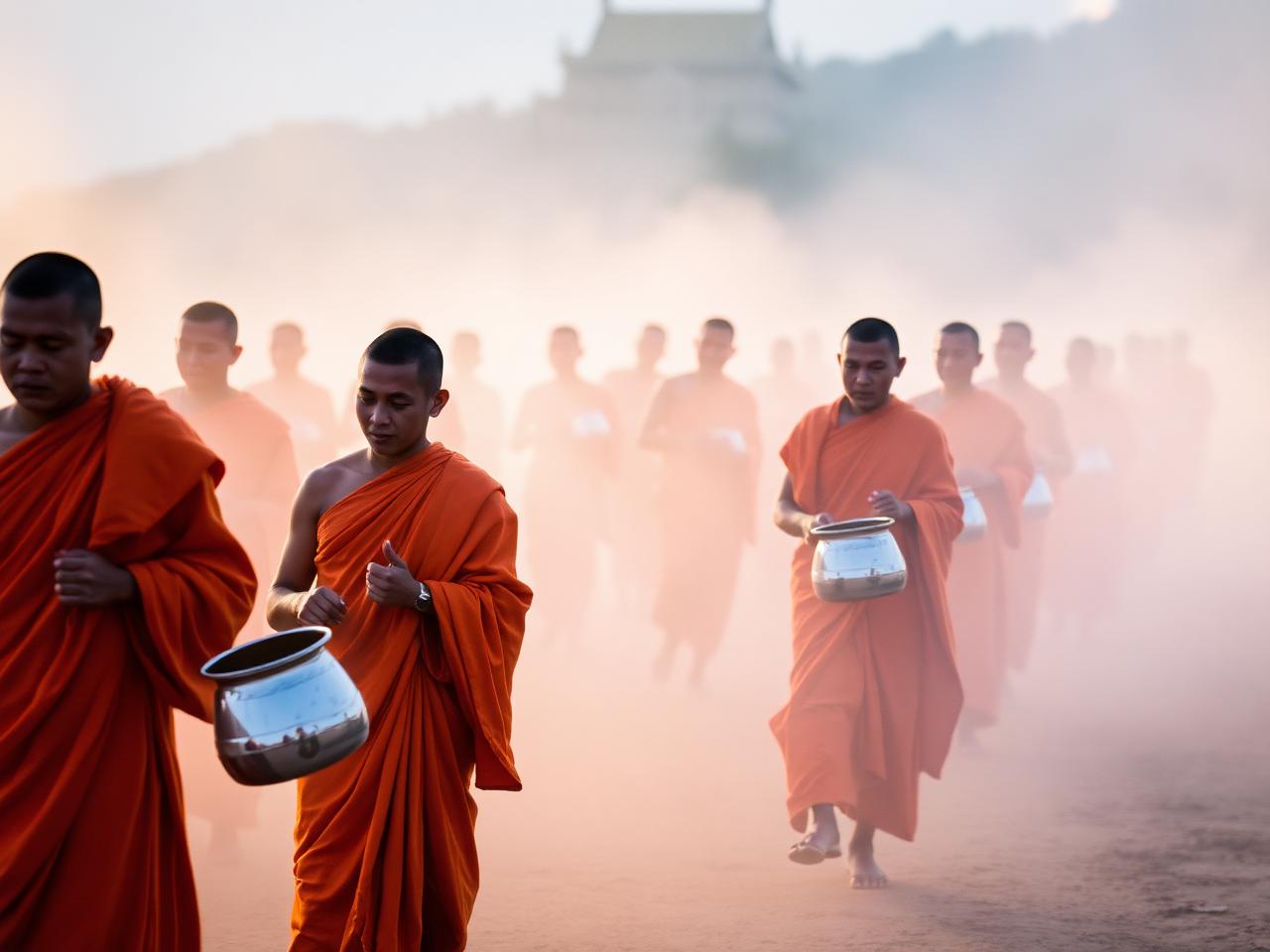
While neighbouring Thailand and Vietnam draw the crowds, Laos has a slower pace of life that makes it perfect for travellers wanting to escape busy cities and experience genuinely authentic culture. From watching monks collect alms in Luang Prabang to kayaking the Nam Song in Vang Vieng, swimming at Kuang Si Falls and hammock days in the 4000 Islands, Laos rewards travellers who slow down.
It's also one of the cheapest countries in Asia — backpackers travel comfortably on £20–30 a day, and the new Laos-China high-speed railway has made getting around faster and easier than ever.
This guide covers everything you actually need: itineraries, real costs, transport that works, the best places compared honestly, food worth seeking out, and the practical details — visa, SIM, money, safety — most blogs gloss over.
Laos destinations map
Tap any destination to jump to its overview. Laos divides loosely into the north (Luang Prabang, Vang Vieng, Nong Khiaw), the central region (Vientiane, Thakhek), and the far south (Pakse, Bolaven Plateau, 4000 Islands).
Best places to visit in Laos
From Luang Prabang's UNESCO old town to the karsts of Vang Vieng and the sleepy Mekong islands of the south, here are the destinations worth building a Laos trip around — what each is like, how long to stay and who they suit best.
North · UNESCO
Luang Prabang
Laos' most beautiful town — saffron-robed monks, French-colonial cafés, riverside temples and the country's best food scene.
North · Nature
Kuang Si Waterfalls
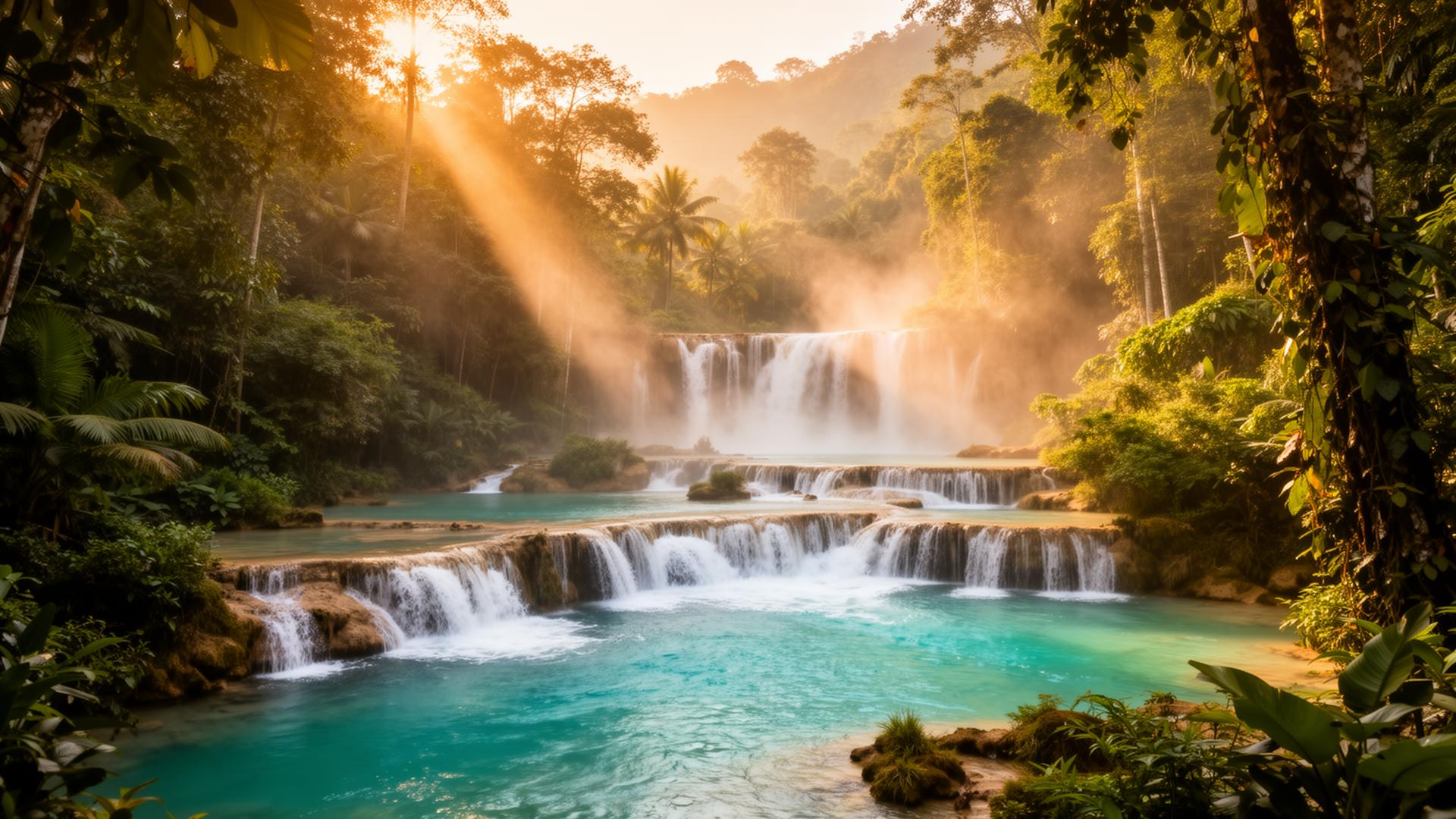
Tiered turquoise pools cascading through jungle outside Luang Prabang — one of Southeast Asia's most beautiful waterfalls.
Central · Adventure
Vang Vieng
Karst mountains, hot-air balloons, kayaking, blue lagoons and cave tubing — Laos' adventure capital, reborn since the railway opened.
Capital · Riverside
Vientiane
Laid-back capital with Patuxai monument, Pha That Luang, French cafés and Mekong sunset bars.
Far North · Slow
Nong Khiaw
Mountain-ringed Mekong-tributary village — viewpoints, hiking, kayaking and some of the best sunrises in Laos.
Far North · Off-grid
Muang Ngoi
Tiny river village reached only by boat from Nong Khiaw — hammocks, treks, no roads.
Central · Motorbike
Thakhek Loop
Iconic 3–4 day motorbike loop through limestone karsts, caves and the spectacular Kong Lor Cave.
Central · Cave
Kong Lor Cave
7.5 km river cave you boat straight through — one of the planet's most extraordinary cave experiences.
South · Mekong
Si Phan Don (4000 Islands)
Sleepy southern Mekong islands — hammocks, sunsets, cycling and the chance to spot Irrawaddy dolphins.
South · Coffee
Pakse & the Bolaven Plateau
Gateway to coffee plantations, waterfalls and another classic motorbike loop.
Northeast · History
Plain of Jars
Mysterious 2,000-year-old stone jars scattered across the highlands around Phonsavan — UNESCO listed.
Far North · Trekking
Luang Namtha
Base for some of Southeast Asia's best community-led jungle treks in the Nam Ha NPA.
South · Temples
Champasak & Wat Phou
Pre-Angkorian Khmer temple ruins above the Mekong — Laos' second UNESCO site.
Things to see and do in Laos
From Luang Prabang's dawn alms ceremony to Vang Vieng's hot-air balloons, Kuang Si's turquoise pools and the hammocks of the 4000 Islands — these are the experiences worth building each leg of your Laos trip around.
UNESCO city
Luang Prabang
- Morning alms ceremony at dawn
- Sunset from Mount Phousi
- Royal Palace Museum
- Night Market on Sisavangvong Road
- Boutique riverside cafés
- Mekong sunset cruise
- Cooking class with market tour
- Wat Xieng Thong & temple-hop
Day trip
Kuang Si Waterfalls
- Swim in the turquoise pools
- Climb to the top of the main falls
- Visit the Tat Kuang Si Bear Rescue Centre
- Picnic in the jungle clearings
- Photograph the lower cascades
- Combine with Tad Sae or Pak Ou Caves
Adventure
Vang Vieng
- Hot-air balloon at sunrise
- Paramotoring over the karsts
- Kayak the Nam Song
- Tubing the river
- Blue Lagoon 1, 3 & 5
- Tham Phu Kham Cave
- Nam Xay viewpoint hike
Capital
Vientiane
- Patuxai Victory Monument
- Pha That Luang golden stupa
- COPE Visitor Centre (UXO history)
- Buddha Park (Xieng Khuan)
- Mekong promenade at sunset
- Night Market by the river
Far south
4000 Islands
- Cycle Don Det and Don Khon
- Liphi (Somphamit) Waterfall
- Khone Phapheng — Southeast Asia's largest waterfall
- Irrawaddy dolphin spotting
- Kayaking through island channels
- Hammock-and-Beerlao afternoons
Adventure
Off-beat Laos
- Thakhek Loop motorbike journey
- Boat through Kong Lor Cave
- Nong Khiaw viewpoints
- Plain of Jars near Phonsavan
- Bolaven Plateau coffee tour
- Luang Namtha jungle trekking
Best Laos itineraries
How long do you need? Laos rewards both short visits (a week covers the classics) and slow trips. Here are five route lengths that consistently work.
Laos in a Week
Luang Prabang → Vang Vieng → Vientiane on the new high-speed railway.
Best for: Short trips & add-ons
Classic Laos
Vientiane → Vang Vieng → Luang Prabang → Kuang Si → onward to Thailand or Vietnam.
Best for: First-time visitors
Two Weeks in Laos
Add Nong Khiaw in the north and the 4000 Islands in the south for the full picture.
Best for: Most travellers
Laos In-Depth
Add Thakhek Loop, Plain of Jars, Luang Namtha trekking and the Bolaven Plateau.
Best for: Backpackers & slow trips
Laos & Northern Thailand
Combine Luang Prabang and Vang Vieng with Chiang Mai and Chiang Rai via the slow boat.
Best for: Two-country trips
Best time to visit Laos
Laos has two main seasons: a dry season (November–April) and a wet season (May–October). November–February is the sweet spot — cool, dry and perfect for sightseeing. March and April are very hot, with crop-burning haze in the north.
Luang Prabang ⭐
November–February — cool mornings and dry, clear sunsets from Mount Phousi.
Vang Vieng ⭐
November–February — perfect hot-air balloon and kayaking conditions.
Nong Khiaw & the North
November–February — clear karst views; avoid March/April haze.
4000 Islands
December–March — lower Mekong levels, hammock weather.
Avoid
March–April for extreme heat and crop-burning haze in the north.
Overall best months
November, December, January and February.
Laos budget guide
Laos is one of Asia's best-value destinations. Here's what each tier actually looks like day-to-day, with realistic daily, weekly and 2-week estimates.
Backpacker
£20 – £30 / day
£140 – £210 / week · £280 – £420 / 2 weeks
- Accommodation: Hostels & guesthouses · £5–10
- Food: Local Lao meals & markets · £1.50–3
- Transport: Buses, second-class train, shared tuk-tuks
- Activities: Waterfalls, viewpoints, free temples
Mid-Range
£40 – £70 / day
£280 – £490 / week · £560 – £980 / 2 weeks
- Accommodation: Boutique hotels · £25–50
- Food: Mix of Lao & Western cafés
- Transport: First-class high-speed train, minivans
- Activities: Guided treks, cooking classes, kayaking
Luxury
£100 – £250+ / day
£700 – £1,750 / week · £1,400 – £3,500 / 2 weeks
- Accommodation: 5★ resorts & heritage hotels · £100–300
- Food: Fine dining & riverside restaurants
- Transport: Private cars and drivers
- Activities: Private guides, hot-air balloons, spa retreats
Sample mid-range day in Luang Prabang
Breakfast £3 · Kuang Si Falls shared tuk-tuk £6 · entry £2.50 · Beerlao sunset £2 · Lao dinner on the night market £7 · boutique guesthouse £35 = £55
Money-saving tips for Laos
Laos is already excellent value, but these small habits quietly cut a 2-week trip cost by 20–30% without sacrificing the experience.
Laos transport guide
The new Laos-China Railway has transformed how you get around Laos. Buses still link every town cheaply, the slow boat from Thailand is iconic, and scooters open up the loops.
Game-changer — modern high-speed train linking Vientiane, Vang Vieng, Luang Prabang and Boten (China border) in hours, not days. Book ahead.
£5 – £25
Cheap, ubiquitous and slow — connect every town in the country. VIP and sleeper buses on the longest routes.
£5 – £20
Faster than buses between tourist hubs (Luang Prabang ↔ Vang Vieng, Vientiane ↔ Vang Vieng before the railway).
£8 – £20
Town transport — agree the fare before getting in or use Loca rideshare in Vientiane.
£1 – £6
Laos' own rideshare app — fixed fares in Vientiane and Luang Prabang.
£1 – £5
Lao Airlines connects Vientiane with Luang Prabang and Pakse — saves time but the train is now usually better value.
£40 – £90
Classic 2-day journey from Huay Xai (Thai border) to Luang Prabang — iconic, social, slow.
£25 – £35
Fast alternative on the Mekong — louder, bumpier and significantly riskier.
£35 – £50
Standard for Vang Vieng, Thakhek Loop and the 4000 Islands — experienced riders only.
£6 – £10 / day
Best way to explore the 4000 Islands, Luang Prabang and Vientiane.
£1 – £3 / day
Where to stay in Laos
Each Lao town has neighbourhoods with completely different personalities. Use this as a shortlist before opening Booking.com or Agoda.
Luang Prabang
Best for
Recommended areas
- Old Town (peninsula)
- Riverside (Mekong)
- Phou Vao Hill
Vang Vieng
Best for
Recommended areas
- Town centre
- Riverside (Nam Song)
- Outside town (resorts)
Vientiane
Best for
Recommended areas
- Riverside / Mekong front
- City Centre (Nam Phou)
- Chao Anouvong
Nong Khiaw
Best for
Recommended areas
- Riverside bungalows
- Across the bridge (Ban Sop Houn)
4000 Islands
Best for
Recommended areas
- Don Det (lively)
- Don Khon (quieter)
- Don Khong (local)
Thakhek
Best for
Recommended areas
- Thakhek town
- Riverside guesthouses
Best food to try in Laos
Lao food is fresh, herby, fiery and underrated — sticky rice, charcoal grills, lemongrass and lime, with French-colonial touches in the cities.
Laap (Larb)
Laos' national dish — minced meat tossed with herbs, lime, chilli and toasted rice powder. Eaten with sticky rice.
Khao Niaw (Sticky Rice)
Steamed in bamboo baskets and eaten by hand — central to every Lao meal.
Tam Mak Hoong
Spicy green papaya salad pounded with chilli, lime, fish sauce and fermented crab — Laos' fierier cousin of Thai som tam.
Khao Piak Sen
Thick, slippery rice noodles in a slow-simmered chicken broth — the perfect Lao breakfast.
Mok Pa
Fish steamed in banana leaf with lemongrass, dill and coconut — fragrant and delicate.
Sai Oua
Lemongrass-and-herb pork sausage grilled over charcoal — best at Luang Prabang night market.
Or Lam
Hearty Luang Prabang stew with buffalo, mushrooms, herbs and the tongue-tingling 'sakhan' pepperwood.
Khao Jee
Crusty French-style baguette stuffed with pâté, pork, herbs and pickled veg — colonial legacy at its best.
Ping Gai
Charcoal-grilled marinated chicken — a market staple eaten with sticky rice.
Lao Coffee
Strong Bolaven Plateau coffee, traditionally served iced with condensed milk.
Beerlao
The national lager — properly cold, properly cheap, properly good.
Tropical Fruit
Mango, dragonfruit, rambutan and longan — fresh, cheap and everywhere.
Top experiences in Laos
Beyond the obvious sights, these are the experiences travellers consistently call out as Laos highlights.
Laos for different travel styles
Solo travel
Laos is one of the easiest and safest solo destinations in Southeast Asia — friendly people, well-trodden backpacker route.
Couples
Boutique riverside stays in Luang Prabang, hot-air balloons in Vang Vieng, hammocks in the 4000 Islands.
Families
Luang Prabang and Vang Vieng work beautifully — gentle activities, short distances by train, calm pace.
Luxury
Rosewood Luang Prabang, Amantaka, Belmond La Résidence Phou Vao — Laos does heritage luxury exceptionally well.
Backpackers
Cheap dorms, the legendary slow boat, easy overland route to Thailand, Vietnam and China.
Adventure
Thakhek Loop, Kong Lor Cave, Nam Ha treks, kayaking the Nam Song, Bolaven Plateau.
Photographers
Monks at dawn in Luang Prabang, karst sunrises in Nong Khiaw, balloons in Vang Vieng, misty Mekong mornings.
Foodies
Lao food is underrated and outstanding — Luang Prabang's night market and cooking classes are essential.
History lovers
Plain of Jars, Wat Phou, COPE Visitor Centre in Vientiane — and Luang Prabang's living heritage.
Laos safety guide
Laos is one of the safest countries in Southeast Asia. The main risks are scooter accidents, night buses on mountain roads and — in remote rural areas — unexploded ordnance (UXO) from the Vietnam War. All standard tourist sites are completely safe.
General safety
Petty crime is rare. Keep valuables secure on overnight buses and in busy night markets.
Scooter safety
Wear a helmet, ride only with a valid licence and proper insurance. Roads vary wildly in quality.
Night buses
Mountain roads, basic driving standards — take the train or fly the longest routes when possible.
UXO / landmines
Stay on marked paths in rural Xieng Khouang province and along the Vietnam border. Tourist sites are safe.
River safety
Speedboats are loud and risky — take the slow boat. Strong Mekong currents in wet season.
Food & water
Drink bottled or filtered water. Busy local restaurants are usually the safest places to eat.
Health
Mosquito-borne illness is present — use repellent, especially at dusk.
Solo travel
Excellent — Laos is welcoming, easy to navigate and one of the friendliest countries in the region.
Emergency numbers
Police: 191 · Ambulance: 195 · Fire: 190 · Tourist Police (Vientiane): +856 21 251 128
Practical information
Money & ATMs
Cash is king. ATMs in tourist hubs (BCEL, LDB) — withdrawal fees usually 20,000–30,000 LAK.
Cards
Visa & Mastercard accepted at nicer hotels and a few restaurants in Luang Prabang and Vientiane. Cash everywhere else.
Thai Baht & USD
Both widely accepted alongside Kip — useful backup in remote areas and at borders.
SIM cards & eSIMs
Unitel and Lao Telecom offer the best tourist SIMs. Airalo eSIMs work in 60 seconds.
Internet & WiFi
Surprisingly good in Luang Prabang and Vientiane. Patchier on the Loop and 4000 Islands.
Plugs & power
Type A, B, C, E and F sockets · 230V / 50Hz. Universal adapter recommended.
Tipping
Not required but appreciated. $1–2 for guides and drivers; round up restaurant bills.
Dress code
Casual; modest at temples — shoulders and knees covered, shoes off before entering.
Useful Lao
Sabaidee (hello), Khop chai (thanks), Tao dai? (how much?), Saep (delicious).
Healthcare
Limited — serious cases evacuate to Bangkok. Travel insurance is essential.
Vaccinations
None required. Hep A, Typhoid, Tetanus and Japanese Encephalitis commonly recommended.
Visa
30-day e-Visa or Visa on Arrival for most nationalities — apply online or at major borders.
Essential apps for Laos
These are the apps actually worth downloading before you fly.
Loca
Lao rideshare for tuk-tuks and cars — fixed fares in Vientiane and Luang Prabang
LCR Ticket
Official Laos-China Railway app — book high-speed train tickets in advance
12Go
Buses, minivans, boats and trains across Laos in one search
BookMeBus
Backup booking platform with strong Laos coverage
Google Maps
Reliable in cities and main tourist areas — download offline maps for the Loop
Maps.me
Better than Google Maps in rural Laos — full offline routing
Google Translate
Camera mode reads Lao menus instantly
Airalo
eSIMs in 60 seconds — Unitel and Lao Telecom coverage
Wise
Cheap GBP → LAK or THB transfers with a debit card
Booking.com
Free cancellation — best for flexible trips
Agoda
Often the best rates in Laos, especially in Vang Vieng and Luang Prabang
XE Currency
Quick GBP / USD / LAK / THB conversions
Laos FAQs
The most common questions about travelling in Laos, answered honestly.
Is Laos worth visiting?
Absolutely. Laos is the quietest, slowest and most underrated country in Southeast Asia. Travellers who give it time — Luang Prabang, Vang Vieng, Nong Khiaw and the 4000 Islands — almost always wish they'd stayed longer.
Is Laos safe for solo travellers?
Yes — one of the safest countries in Southeast Asia for solo travel. Petty crime is rare and the backpacker route is well-trodden. Standard awareness applies on night buses and around scooter rental.
How many days do you need in Laos?
7 days covers Luang Prabang, Vang Vieng and Vientiane. 10–14 days is the sweet spot for adding the north (Nong Khiaw) or south (4000 Islands). 3 weeks lets you slow down properly.
What is the best month to visit Laos?
November to February — cool, dry and ideal. October and early November are particularly beautiful as landscapes are still lush from the rains. Avoid March/April for crop-burning haze in the north and extreme heat.
Is Laos cheaper than Thailand?
Slightly — accommodation and food are roughly 10–20% cheaper than equivalent Thai destinations, though transport can cost similar. Backpackers travel comfortably on £20–30 a day.
Do I need cash in Laos?
Yes — Laos remains a largely cash economy. Cards work in upmarket hotels and a few restaurants in Luang Prabang and Vientiane, but everywhere else is Kip or Thai Baht in hand. ATMs are widely available in tourist hubs.
Can you drink the tap water in Laos?
No — drink bottled or filtered water. Most guesthouses and hostels offer refill stations.
Is English widely spoken in Laos?
In tourist areas — Luang Prabang, Vang Vieng, Vientiane, the 4000 Islands — yes. In rural villages and on the Thakhek Loop, basic Lao or a translation app is helpful.
Can tourists rent scooters in Laos?
Yes — rentals are easy in Vang Vieng, the Thakhek Loop, the 4000 Islands and Pakse. Wear a helmet and only ride if experienced. Insurance often requires a motorbike licence.
What is the best itinerary for first-time visitors?
10 days: Vientiane (2) → Vang Vieng (2–3) → Luang Prabang (3–4) → Kuang Si day trip (1) → onward to Thailand or Vietnam. The high-speed train links the whole route.
Is the Laos-China Railway worth taking?
Yes — it's transformed travel in Laos. Vientiane to Luang Prabang now takes under 2 hours instead of 10 by bus. Book ahead in peak season.
Do I need a visa for Laos?
Most nationalities can get a 30-day e-Visa online or Visa on Arrival at major land borders and airports (around $30–45). Bring a passport photo and crisp USD if doing VOA.
Is Laos good for backpackers?
One of Southeast Asia's classic backpacker stops. Cheap dorms, big hostel scenes in Vang Vieng and Luang Prabang, the iconic slow boat and easy onward routes.
Is the slow boat to Luang Prabang worth it?
Yes — it's a 2-day Mekong journey from the Thai border via Pakbeng. Slow, social and one of the best ways to arrive in Luang Prabang. Bring a cushion and snacks.
Are credit cards widely accepted?
Only in nicer hotels and a handful of restaurants in Luang Prabang and Vientiane. Plan to use cash for everything outside those two cities.
How is the WiFi and internet in Laos?
Surprisingly good in Luang Prabang, Vientiane and Vang Vieng cafés and hotels. Patchier on the Loop and the 4000 Islands. Airalo eSIMs are the easiest mobile data.
Are vaccinations required for Laos?
No vaccinations are required for entry. Hepatitis A, Typhoid, Tetanus and Japanese Encephalitis (for long rural stays) are commonly recommended. Speak to a travel clinic before flying.
What plug type does Laos use?
Type A, B, C, E and F sockets at 230V/50Hz. A universal adapter covers you.
Is tipping expected in Laos?
Not traditionally. Many tourist restaurants now add a 10% service charge. Tipping guides, drivers and spa staff $1–2 is appreciated.
Are landmines or UXO a risk in Laos?
Yes — unexploded ordnance from the Vietnam War remains in some rural areas, especially around Xieng Khouang (Plain of Jars). Stay on marked paths in the countryside. All standard tourist sites are completely safe.
Should I take the slow boat or fly?
Take the boat for the experience; fly or take the train only if you're tight on time. The slow boat is one of Southeast Asia's classic journeys.
Can I combine Laos with Thailand, Vietnam or Cambodia?
Yes — Laos is brilliantly placed. Easy land/river crossings to Northern Thailand (Chiang Khong), Vietnam (Hanoi via overnight bus or flight) and Cambodia (4000 Islands → Stung Treng).