Why visit Thailand
Few countries deliver as much, for as little, as Thailand. It is the most-visited country in Southeast Asia for a reason: jaw-dropping islands and beaches, ancient temples, world-famous food, mountain villages in the north, and tourism infrastructure that quietly works — even when you arrive at 2am with a backpack and a vague plan.
Thailand for first-time visitors is forgiving. English is widely spoken in tourist areas, transport is cheap and easy, and the country is set up for everyone from backpackers stretching £30 a day to luxury travellers looking at £500-a-night beachfront villas. Couples come for the islands, families for the safe beaches and gentle pace, digital nomads for Chiang Mai's café scene, and solo travellers for the easiest social scene in Asia.
Value for money remains Thailand's superpower. A bowl of street noodles is £1.50. A 90-minute Thai massage rarely tops £8. Even mid-range hotels in Bangkok and Chiang Mai start around £25 a night. That same budget, stretched, easily covers diving courses on Koh Tao, cooking classes in Chiang Mai, and ferry-hops between half a dozen islands.
And then there's the food. Thai cuisine is consistently ranked among the best in the world — and the best of it isn't in restaurants. It's at a plastic stool in a back-alley night market in Chiang Mai, or a floating boat noodle stand outside Ayutthaya, or a beachside seafood grill on Koh Lanta where the fish came in that morning.
For adventure travellers, Thailand offers diving and snorkelling in the Andaman and Gulf, rock climbing in Railay, jungle trekking around Khao Sok, and motorbike loops through the mountains of Mae Hong Son and Pai. For beach lovers, the choice is genuinely overwhelming — 1,400+ islands and over 3,000 km of coastline split across two seas with completely different weather patterns.
Thailand is also one of the safest countries in Southeast Asia. Crime against tourists is rare. The main risks are road traffic (especially scooters) and the kind of low-grade scams you'll find anywhere — easily avoided with a little awareness. Healthcare is excellent in the major cities and travel insurance is non-negotiable but inexpensive.
This guide is built to be everything you actually need: itineraries, real costs, transport that works, the best islands compared honestly, food worth seeking out, and the practical details — visa, SIM, money, etiquette — most blogs gloss over. Bookmark it, share it, come back to it. Thailand rewards repeat visits.
Thailand destinations map
Tap any destination to open its dedicated guide (coming soon for each). Thailand divides loosely into four travel regions: the north (Chiang Mai & Pai), centre (Bangkok & Ayutthaya), the Andaman coast (Phuket, Krabi, Phi Phi) and the Gulf islands (Samui, Phangan, Tao).
Best places to visit in Thailand
From frenetic Bangkok to slow days on Koh Lanta, here are the destinations worth building a Thailand trip around — what each is like, how long to stay and who they suit best.
Capital · Culture
Bangkok
The chaotic, brilliant gateway to Thailand — temples, rooftop bars and the world's best street food.
North · Culture
Chiang Mai
Moated old city, mountain temples, cooking schools and the country's most relaxed pace.
North · Off-beat
Chiang Rai
Home to the White Temple, golden triangle viewpoints and a quieter northern feel.
North · Mountains
Pai
A laid-back valley town of waterfalls, hot springs and winding mountain roads.
Andaman · Beach
Phuket
Thailand's largest island — convenient, lively and the launchpad for Phi Phi and Phang Nga Bay.
Andaman · Beach
Krabi
Limestone cliffs, hidden lagoons and the dreamy beaches of Ao Nang and Railay.
Andaman · Beach
Railay
A roadless peninsula of jungle, rock climbing and some of Thailand's most photogenic beaches.
Andaman · Islands
Koh Phi Phi
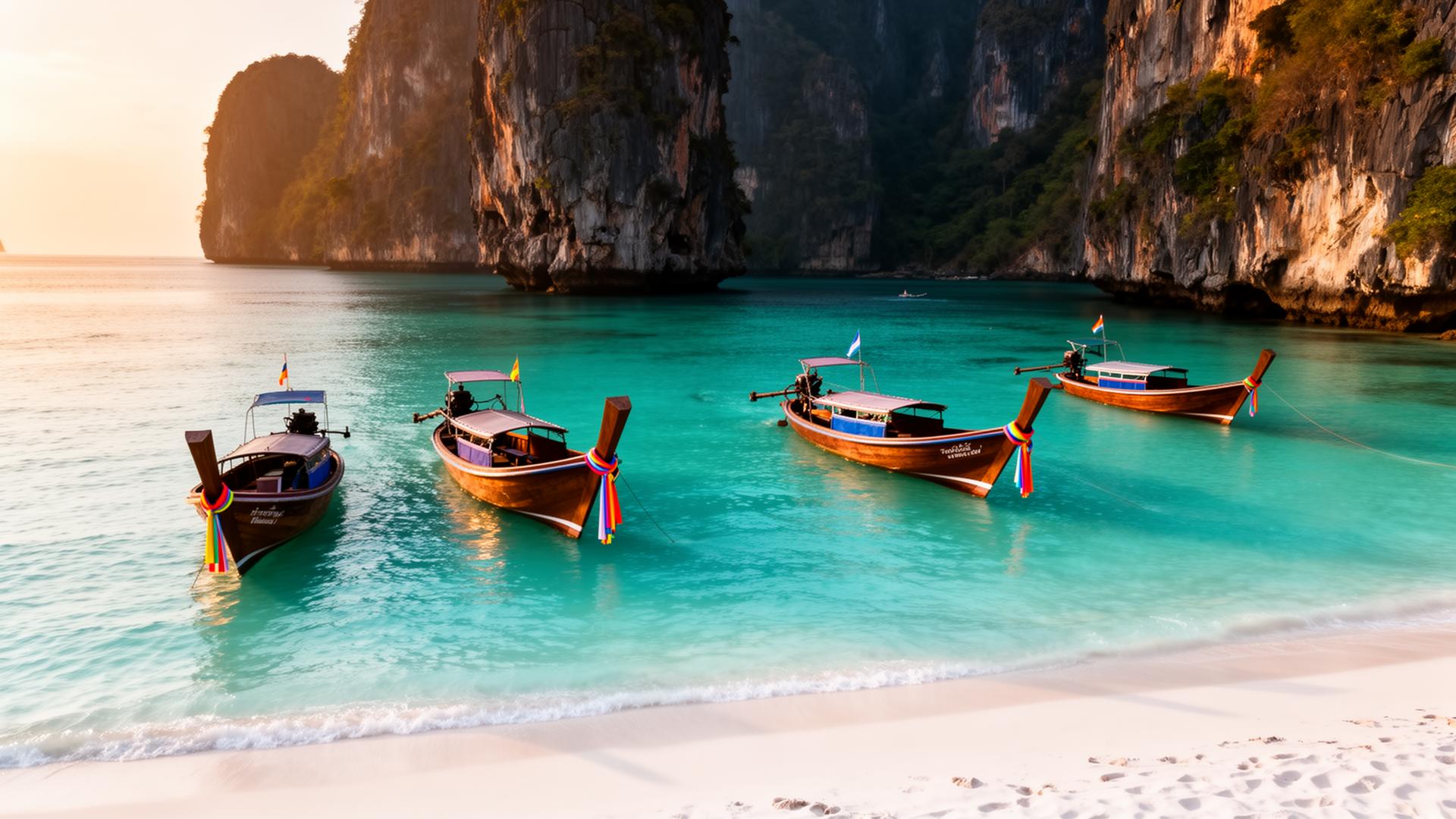
Postcard-perfect bays, party boats and the iconic Maya Bay viewpoint.
Gulf · Beach
Koh Samui
Big-island comfort with luxury resorts, waterfalls and ferry links to Phangan and Tao.
Gulf · Diving
Koh Tao
The world's cheapest place to learn to dive, with great snorkelling and a backpacker heart.
Gulf · Wellness
Koh Phangan
Home of the Full Moon Party — and, away from it, jungle yoga retreats and quiet northern coves.
Andaman · Slow
Koh Lanta
Long, quiet beaches and a laid-back, family-friendly island vibe.
South · Jungle
Khao Sok
Ancient rainforest, floating bungalows on Cheow Lan Lake and elephant spotting.
Gulf Coast · Beach
Hua Hin
Thailand's original royal beach town — easy weekend escape from Bangkok.
East · Beach
Pattaya
Loud, easy and undeniably popular — close to Bangkok with islands on the doorstep.
Central · History
Ayutthaya
UNESCO-listed ruins of the former Thai capital, easily visited as a day trip from Bangkok.
Things to see and do in Thailand
From temple-hopping in Bangkok to island-hopping in the Andaman, these are the experiences worth building each leg of your Thailand trip around — grouped by region so you can mix and match.
Capital
Explore Bangkok
- Visit the Grand Palace and Wat Phra Kaew
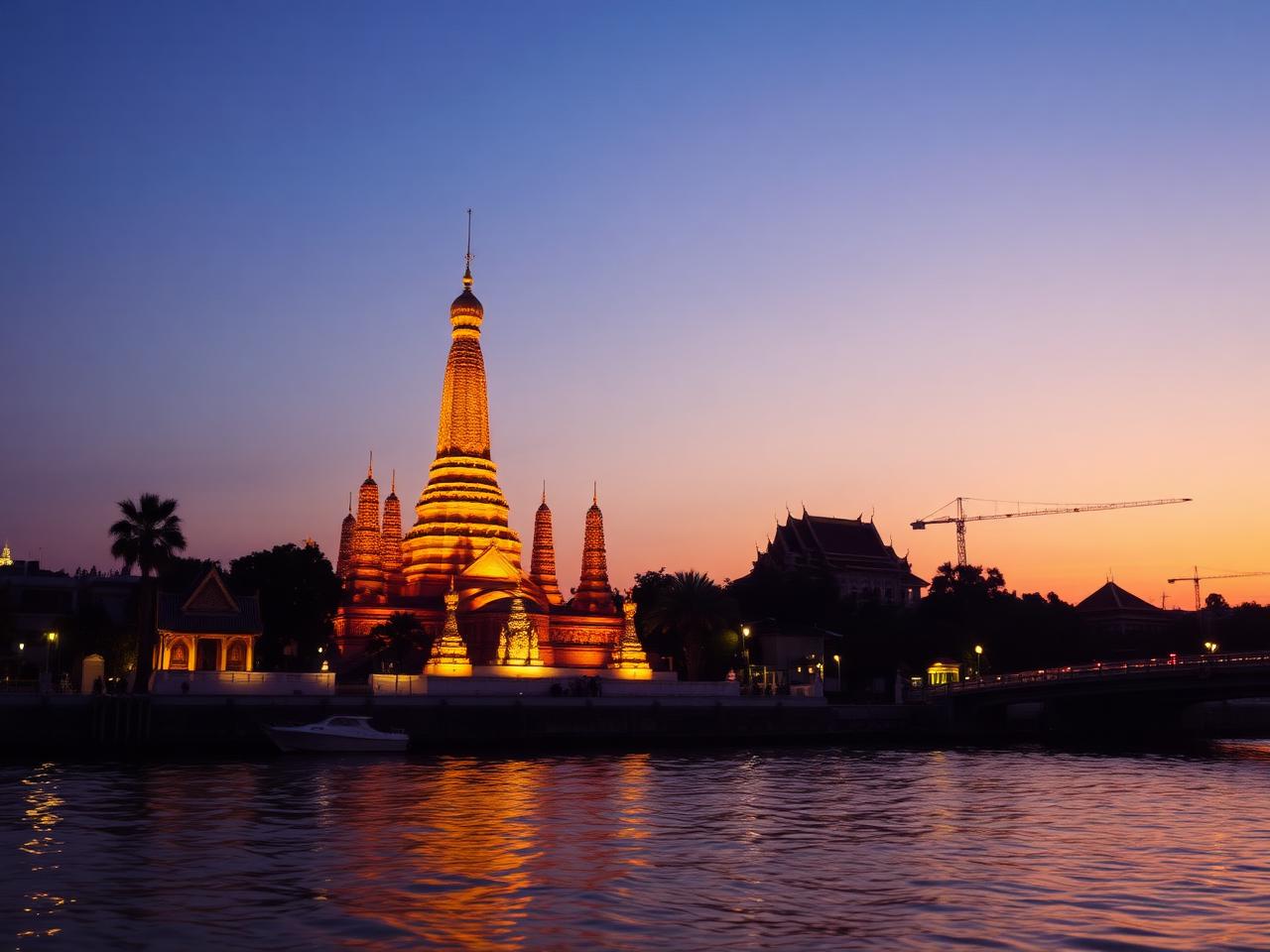
- See Wat Arun at sunset
- Explore Chinatown's street food scene
- Visit floating markets
- Shop at Chatuchak Weekend Market
- Experience rooftop bars and river cruises
North
Visit Chiang Mai
- Wander the Old City temples
- Explore local night markets
- Take a Thai cooking class
- Visit ethical elephant sanctuaries
- Explore nearby waterfalls
- Hike in Doi Inthanon National Park
Andaman & Gulf
Island Hopping
- Koh Phi Phi
- Koh Lanta
- Koh Samui
- Koh Tao
- Koh Phangan
- Koh Lipe
Andaman
Explore Krabi
- Railay Beach
- Tiger Cave Temple
- Emerald Pool
- Hot Springs
- Four Islands boat tour
Andaman
Visit Phuket
- Big Buddha
- Old Town
- Freedom Beach
- Kata Beach
- Promthep Cape sunset
- Boat trips to nearby islands
Mountains
Northern Thailand
- Pai's relaxed atmosphere
- Mae Hong Son Loop
- Chiang Rai's White Temple
- Golden Triangle
Active
Adventure Activities
- Rock climbing in Railay
- Jungle trekking
- Muay Thai classes
- Ziplining
- ATV tours
- Diving in Koh Tao
Best Thailand itineraries
How long do you need? Honestly, more than you think. Here are five route lengths that consistently work, from a quick first taste to a full month exploring both coasts.
Perfect First Trip
Bangkok, a slice of the north and one Andaman island.
Best for: First-timers
Balanced Thailand
Bangkok → Chiang Mai → Krabi & Railay.
Best for: Couples & first-timers
Most Popular Route
Bangkok, Chiang Mai, Phuket and 1–2 islands.
Best for: Most travellers
Complete Thailand
North, Andaman and Gulf — both coasts covered.
Best for: Backpackers & slow trips
Ultimate Backpacking
Full loop with hidden gems and slow island time.
Best for: Long-haul travellers
Best time to visit Thailand
Thailand has three rough seasons: cool/dry (Nov–Feb), hot (Mar–May), and green/rainy (Jun–Oct). But weather varies sharply by region — the Gulf islands (Samui, Phangan, Tao) often stay dry while the Andaman (Phuket, Krabi) is wet, and vice versa.
Northern Thailand
Best Nov–Feb. Avoid Mar–Apr burning season in Chiang Mai when air quality drops.
Central Thailand
Bangkok is hottest Apr–May, most pleasant Dec–Feb.
Andaman Coast
Phuket, Krabi, Phi Phi — best Nov–Apr. Big swells Jun–Oct.
Gulf Islands
Samui, Phangan, Tao — best Feb–Sep. Wettest Oct–Dec.
Thailand budget guide
Thailand is one of the best-value countries in the world, but the gap between backpacker and luxury budgets is wide. Here's what each tier actually looks like, with realistic daily, weekly and 2-week estimates.
Backpacker
£25 – £40 / day
£175 – £280 / week · £350 – £560 / 2 weeks
- Accommodation: Hostels, fan rooms · £4–10
- Food: Street food & markets · £4–8
- Transport: Buses, songthaews, sleeper trains
- Activities: Temples, beaches, occasional tour
Mid-Range
£60 – £100 / day
£420 – £700 / week · £840 – £1,400 / 2 weeks
- Accommodation: Boutique hotels · £25–60
- Food: Mix of street food & restaurants
- Transport: Domestic flights, Grab, ferries
- Activities: Cooking class, day tours, massages
Luxury
£200 – £500+ / day
£1,400 – £3,500 / week · £2,800 – £7,000 / 2 weeks
- Accommodation: 5★ resorts · £150–500+
- Food: Fine dining, hotel restaurants
- Transport: Private transfers, business class
- Activities: Private tours, spas, yacht charter
Sample mid-range day in Krabi
Coffee & breakfast £4 · ferry to Railay £5 · longtail tour £18 · seafood lunch £8 · 90-min Thai massage £8 · sunset cocktail £4 · beachfront dinner £14 = £61
Money-saving tips for Thailand
Thailand is already brilliant value, but these are the small habits that quietly cut a 2-week trip cost by 20–30% without sacrificing the experience.
Thailand transport guide
Getting around Thailand is one of the easiest things about it. Long-distance trains, cheap domestic flights, an extensive bus network and reliable rideshare apps in every major city mean you rarely need to overthink the journey.
Bangkok ↔ Chiang Mai / Phuket / Krabi
£25 – £80
Bangkok ↔ Chiang Mai / Surat Thani
£15 – £35
Comfortable overnight, book early
£25 – £45
Cheap, slow, frequent everywhere
£8 – £25
Fast door-to-door, often cramped
£5 – £15
Rideshare in cities — preferred over taxis
£1.50 – £6
Shared pickup trucks in towns & islands
£0.30 – £2
Iconic but always agree price first
£2 – £5
Freedom on islands — ride with care
£4 – £8 / day
Best for the north & mainland coast
£18 – £40 / day
Speedboats & big ferries; book on 12Go
£8 – £30
Worth it for groups & late arrivals
£25 – £80
Where to stay in Thailand
Each Thai destination has its own personality, and so do its neighbourhoods. Use this as a shortlist for the right area in each city or island before opening Agoda or Booking.com.
Bangkok
Best for
Recommended areas
- Sukhumvit
- Silom
- Riverside
- Siam
- Old Town
Chiang Mai
Best for
Recommended areas
- Old City
- Nimmanhaemin
- Riverside
Phuket
Best for
Recommended areas
- Kata
- Karon
- Kamala
- Bang Tao
- Patong (nightlife)
Krabi
Best for
Recommended areas
- Ao Nang
- Railay Beach
- Tub Kaek
Koh Samui
Best for
Recommended areas
- Chaweng
- Fisherman's Village
- Lamai
Koh Lanta
Best for
Recommended areas
- Long Beach
- Klong Khong
- Klong Nin
Koh Tao
Best for
Recommended areas
- Sairee Beach
- Mae Haad
- Chalok Baan Kao
Best food to try in Thailand
Thai food is genuinely one of the best reasons to visit. Order beyond Pad Thai — the country's regional cuisines are wildly different and almost always better at the stall than the restaurant.
Pad Thai
Stir-fried rice noodles with tamarind, peanuts and lime — better at street stalls than tourist restaurants.
Khao Soi
Northern coconut curry noodle soup — a Chiang Mai essential.
Tom Yum
Hot and sour shrimp soup with lemongrass and chilli.
Green Curry
Creamy coconut curry with Thai basil — try it with roti.
Massaman Curry
Mild, rich curry with peanuts and potatoes.
Som Tam
Green papaya salad — order "farang" spice to start.
Boat Noodles
Dark, deeply flavoured beef or pork noodle soup.
Mango Sticky Rice
Sweet sticky rice, ripe mango, warm coconut cream.
Thai Milk Tea
Bright orange, sweet and iced — the perfect afternoon pick-me-up.
Coconut Ice Cream
Served in a coconut with peanuts and sticky rice.
Moo Satay
Grilled pork skewers with peanut sauce.
Roti
Crispy fried flatbread with banana and condensed milk.
Fresh Seafood
Whole grilled fish, prawns and squid on every island.
Top experiences in Thailand
Beyond the beaches, these are the experiences travellers consistently call out as Thailand highlights.
Thailand for different travel styles
Solo travel
One of the easiest countries in the world to travel alone.
Couples
Private villas, sunset cruises, island escapes.
Families
Safe, affordable, packed with kid-friendly beaches and activities.
Luxury
World-class resorts in Phuket, Samui, Krabi and Chiang Mai.
Backpackers
Cheap dorms, easy transport and a huge social scene.
Digital nomads
Chiang Mai is one of Asia's nomad capitals.
Adventure
Diving, climbing, trekking and motorbike loops.
Wellness
Yoga, detox retreats and traditional Thai massage.
Foodies
Arguably the best street food on earth.
Thailand safety guide
Thailand is, statistically, one of the safer countries in Southeast Asia. The two real risks are road accidents (especially scooters) and the usual tourist scams. Both are easily managed.
General safety
Violent crime against tourists is rare. Standard city precautions apply.
Common scams
Gem shops, fake closed-temple tuk-tuk tours, inflated jet-ski damage claims.
Road & scooter safety
Wear a helmet, never ride without an international licence, use a passport copy.
Temple etiquette
Cover shoulders and knees. Remove shoes. Don't point feet at Buddha images.
Money safety
Use ATMs attached to banks. Avoid carrying large amounts of cash.
Health & water
Drink bottled water. Pack mosquito repellent. Travel insurance is essential.
Women's safety
Generally very safe for solo women — standard precautions in nightlife areas.
LGBTQ+ travellers
Welcoming and open; one of the most progressive countries in the region.
Emergency numbers
Tourist Police: 1155 · Ambulance: 1669 · Police: 191
Practical information
Money & ATMs
Cash is essential. ATM fees are around 220 baht per withdrawal — withdraw larger amounts less often.
Cards
Visa & Mastercard accepted in hotels, malls and chain restaurants. Amex patchier.
SIM cards & eSIMs
AIS, True and DTAC offer tourist SIMs. Airalo eSIMs work in 60 seconds.
Internet & WiFi
Excellent — free WiFi in cafés and hotels, strong 4G/5G almost everywhere.
Plugs & power
Type A, B and C sockets · 220V / 50Hz. Universal adapter recommended.
Tipping
Not required but appreciated — 20–50 baht in restaurants, 50–100 baht for guides.
Dress code
Casual everywhere, modest at temples (cover shoulders and knees).
Religion & customs
Buddhist majority — be respectful around monks and never touch heads.
Useful Thai phrases
Sawasdee (hello), Khop khun (thank you), Mai pet (not spicy), Aroi (delicious).
Healthcare
Excellent private hospitals in major cities (Bumrungrad, Bangkok Hospital).
Vaccinations
None required. Hepatitis A, Typhoid and Tetanus commonly recommended.
Visa
30–60 days visa-free for most Western nationalities — always check current rules.
Essential apps for Thailand
These are the apps actually worth downloading before you fly.
Grab
Rideshare & food delivery
Bolt
Cheaper rideshare alternative
12Go
Trains, buses & ferries
Google Maps
Reliable across the country
Google Translate
Camera mode reads Thai menus
Airalo
eSIMs in 60 seconds
Wise
Cheap currency transfers
Agoda
Best hotel rates in Asia
Booking.com
Free cancellation flexibility
Klook
Tours & transfers
GetYourGuide
Experiences & tickets
Maps.me
Offline maps for islands
Thailand FAQs
30 of the most common questions about travelling in Thailand, answered honestly.
Is Thailand safe for tourists?
Yes. Thailand is generally very safe for tourists, including solo travellers and families. The biggest risks are road accidents (especially on scooters) and the usual tourist scams. Use Grab in cities, agree tuk-tuk prices upfront and ride scooters with extreme caution.
How expensive is Thailand to travel in?
Thailand offers exceptional value. Backpackers comfortably spend £25–40 per day, mid-range travellers £60–100, and luxury travellers £200+. A street meal costs £1.50–3, a beer £1.50–2.50, and a mid-range hotel room £25–60.
Do I need cash in Thailand?
Yes — cash is essential for street food, transport, markets and most small businesses. Cards are accepted in hotels, malls and mid-to-upper restaurants. Withdraw larger amounts less often to reduce ATM fees (around 220 baht per withdrawal).
How much should I budget for 2 weeks in Thailand?
Roughly £700–1,400 for mid-range travel, excluding international flights. Backpackers can do 2 weeks for £400–600; luxury travel starts around £3,000.
When is the best time to visit Thailand?
November to March is the sweet spot — dry, sunny and pleasantly warm. April is the hottest month, and the green season runs roughly June–October with cheaper prices and quieter beaches.
Which is the best island in Thailand?
It depends on your style. Koh Lanta and Koh Yao Noi for slow travel, Koh Tao for diving, Phi Phi for party-and-beach, Koh Samui for comfort, and Koh Phangan for wellness or the Full Moon Party.
Can you drink the tap water in Thailand?
No — drink bottled or filtered water. Most hotels and hostels provide refill stations. Brushing your teeth with tap water is fine.
Is tipping expected in Thailand?
Not traditionally, but appreciated. A 20–50 baht tip in restaurants and 50–100 baht for tour guides or drivers is standard for foreign tourists.
Can I use Grab in Thailand?
Yes — Grab works in Bangkok, Chiang Mai, Phuket, Krabi, Pattaya and most major cities and islands. It's almost always cheaper and easier than metered taxis.
How many days do I need in Thailand?
10–14 days is the sweet spot for a first trip. 7 days is doable if you focus on one region. 3+ weeks lets you slow down and see both coasts.
Do I need a visa for Thailand?
Most Western nationalities (UK, EU, US, Canada, Australia) receive 30–60 days visa-free on arrival. Always check the current rules with the Thai embassy before flying — they change.
Can I travel Thailand by train?
Yes — the State Railway of Thailand links Bangkok with Chiang Mai, Surat Thani (for the Gulf islands), Ayutthaya and the south. Sleeper trains are comfortable and well worth booking.
What are the best beaches in Thailand?
Railay Beach, Maya Bay, Freedom Beach (Phuket), Bottle Beach (Koh Phangan), Long Beach (Koh Lanta), and Ao Nui (Krabi) consistently rank as Thailand's best.
What food should I try in Thailand?
Pad Thai, Khao Soi (in the north), Tom Yum, Green Curry, Massaman, Som Tam, Boat Noodles and Mango Sticky Rice are essential. Eat where the locals queue.
Can I visit Thailand during the rainy season?
Yes — rains usually fall as short, heavy bursts rather than all-day downpours. The Gulf coast (Koh Samui, Phangan, Tao) actually has its own micro-climate and is often dry when the Andaman is wet.
Are credit cards widely accepted?
Visa and Mastercard are accepted in hotels, malls, supermarkets and chain restaurants. Amex is patchier. You'll still need cash daily.
How is the internet and WiFi in Thailand?
Excellent. Free WiFi is standard in cafés, hotels and many restaurants. 4G/5G coverage is strong even on most islands. An Airalo eSIM is the easiest data option.
What's the best Thailand itinerary?
For 2 weeks: Bangkok (3 nights) → Chiang Mai (4 nights) → fly south → Krabi/Railay (3 nights) → Koh Phi Phi or Koh Lanta (3 nights). Adjust to taste.
What's the best month to visit Thailand?
February is widely considered the perfect month — dry, warm but not yet brutally hot, and just past peak Christmas/New Year crowds.
Can I backpack Thailand alone?
Absolutely — Thailand is one of the world's most popular solo-travel destinations. Hostels, organised transport and the social scene make it easy to meet other travellers.
Is Thailand good for first-time visitors to Asia?
Yes — it's often called Asia's gateway country. English is widely spoken in tourist areas, tourism infrastructure is excellent and getting around is straightforward.
What should I pack for Thailand?
Light breathable clothing, modest layers for temples, swimwear, reef-safe sunscreen, a quality day pack, mosquito repellent and a refillable water bottle.
Are there scams to watch out for?
Yes — common ones include gem shop scams, fake "closed temple" tuk-tuk tours and jet-ski damage claims. Use Grab, book tours through trusted operators and politely walk away from anything pushy.
Is it safe to rent a scooter?
Only if you're experienced and have travel insurance covering motorbikes. Roads are busy, accidents are the #1 cause of tourist injuries, and rentals often want to keep your passport (use a copy).
Do I need travel insurance for Thailand?
Yes — non-negotiable. Healthcare is good but private hospitals charge Western prices. Make sure your policy covers motorbikes if you plan to ride.
Are vaccinations required for Thailand?
No vaccinations are required for entry, but Hepatitis A, Typhoid and Tetanus boosters are commonly recommended. Check with your travel clinic.
Is Thailand LGBTQ+ friendly?
Yes — Thailand is one of the most LGBTQ+ welcoming countries in Asia, with vibrant scenes in Bangkok, Phuket and Chiang Mai.
What plug type does Thailand use?
Type A, B and C sockets at 220V/50Hz. A universal travel adapter covers you.
Can I drink alcohol in Thailand?
Yes — alcohol is widely sold, though sales are restricted between 2pm–5pm and after midnight in shops. Some Buddhist holidays are fully dry days.
How early should I book accommodation in Thailand?
For November–February peak season, book popular islands 1–3 months ahead. The rest of the year, a few days' notice is fine outside major holidays.